
AfriCGE’s community engagement activities under the Shaping Inclusive Transitions (SIT) initiative in Mpumalanga concluded this week, marking a series of successful dialogues in Ermelo and Emalahleni. These engagements focused on building partnerships, connecting with grassroots initiatives, and listening to the voices of local communities, documenting their needs, challenges, and aspirations around the just transition.
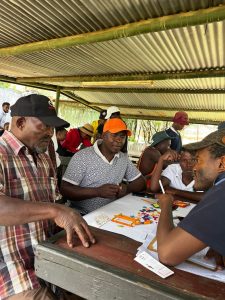
Insights from the Ground: Concerns and Hopes
Across these discussions, communities expressed a range of concerns from fears of being left behind by policies that overlook their realities and the environmental impacts of ongoing activities, to frustrations about large-scale green policies and projects that fail to deliver tangible benefits to those living in close proximity. At the same time, there was a strong sense of hope for a future that is inclusive, equitable, and reflective of their lived experiences. Communities emphasised the need for climate and development policies that acknowledge their local contexts and provide real opportunities for participation and growth.
The Importance of Linkages and Local Collaboration
A key insight from these engagements is the importance of creating linkages between local communities, civil society organisations (CSOs), and other stakeholders. Such connections help establish platforms for amplifying local voices, spotlighting critical issues, and co-creating bottom-up solutions that inform inclusive and accountable climate action and green policy development.
This approach is essential to unlocking opportunities, mobilising finance, and driving policy alignment through initiatives like SIT, which serve as amplifiers and connectors across different levels of society.
Looking Ahead: Amplifying Voices on Global Platforms
Global platforms such as COP30 and the G20 summit present valuable opportunities to further highlight the work of the SIT initiative amplifying community voices, promoting green skills and jobs, and advancing inclusive policy frameworks. Strengthening networks that connect communities in need with partners, resources, and supporters will be vital to scaling up locally led just transition efforts, unlocking new opportunities, and ensuring that no one is left behind in Africa’s green economy transformation.
Building Long-Term Partnerships with CSOs and Communities
Sustained engagement with CSOs and local communities beyond the initial dialogues is crucial. Building long-term partnerships fosters trust, accountability, and collective ownership of the transition process. It enables communities to participate meaningfully in shaping interventions that directly impact their livelihoods and environments.
Continuous collaboration also allows AfriCGE and its partners to monitor progress, document lessons, and adapt strategies in response to emerging challenges and opportunities, ensuring that the just transition remains responsive and grounded in community realities.
Knowledge Products and Evidence-Based Advocacy
Using key findings from these engagements to produce informative reports, policy briefs, and documentaries will be critical for evidence-based advocacy. These outputs not only capture the lived experiences of communities but also provide actionable insights for decision-makers, funders, and development partners. By presenting data-driven narratives and community voices in accessible formats, AfriCGE can attract additional stakeholders, strengthen alliances, and inform the design of policies and programmes that advance an equitable green transition.
Conclusion: Sustaining Momentum for an Inclusive Transition
Ultimately, sustained collaboration and documentation are vital in ensuring that the SIT initiative continues to grow in scope and impact, helping to build an inclusive, community-centred transition that reflects the aspirations of those most affected by climate change and economic transformation.
Author: Kennedy Simango
Research Analyst
